Fore-edge paintings

The gilt edges of books sometimes hide secret paintings. These miniature masterpieces are known as fore-edge paintings. To create the image, the artist slightly fans out and clamps the fore-edge of the book and paints the edges with watercolour. They then gild the edges, hiding the painting from sight when the book is closed.
Historically, these paintings could be contemporary with the books, or an artist could add them later. That might be why they are not always related to the subject matter of the book, as the artwork could be inspired by any number of things.
A double fore-edge painting is a variation from the standard, referring to two separate images on the same fore-edge (sometimes visible at the same time or only visible from different angles). A triple fore-edge painting refers to yet another painting, usually on the top edge of the book.
The Library holds several fore-edge paintings, including:
- Fore-edge painting: The poetical works of Henry Kirke White (1853) by unknown artist. Deane RB 1285.1 23 or view a digitised copy.
- Fore-edge painting: The poetical and prose works of Henry Kirke White (1880-1889) by unknown artist. Deane RB 1285.1 14 or view a digitised copy.
- Fore-edge painting: The complete angler (1823) by unknown artist. RB 513.5 35 or view a digitised copy.
- Double fore-edge painting: Proverbial philosophy (1854) by unknown artist. Deane RB 4754.75 or view a digitised copy.
- Fore-edge painting: Hudibras (1819) by unknown artist. RB 4719.69 or view a digitised copy of Volume 1, Volume 2 and Volume 3.
- Fore-edge painting: The student, or, the midland counties' literary repository. nos. 1-7 (1838) by unknown artist. Deane RB 4738.6 or view a digitised copy.
- Split double fore-edge painting: The Holy Bible (1796) by unknown artist. RB 4696.97 or view a digitised copy.


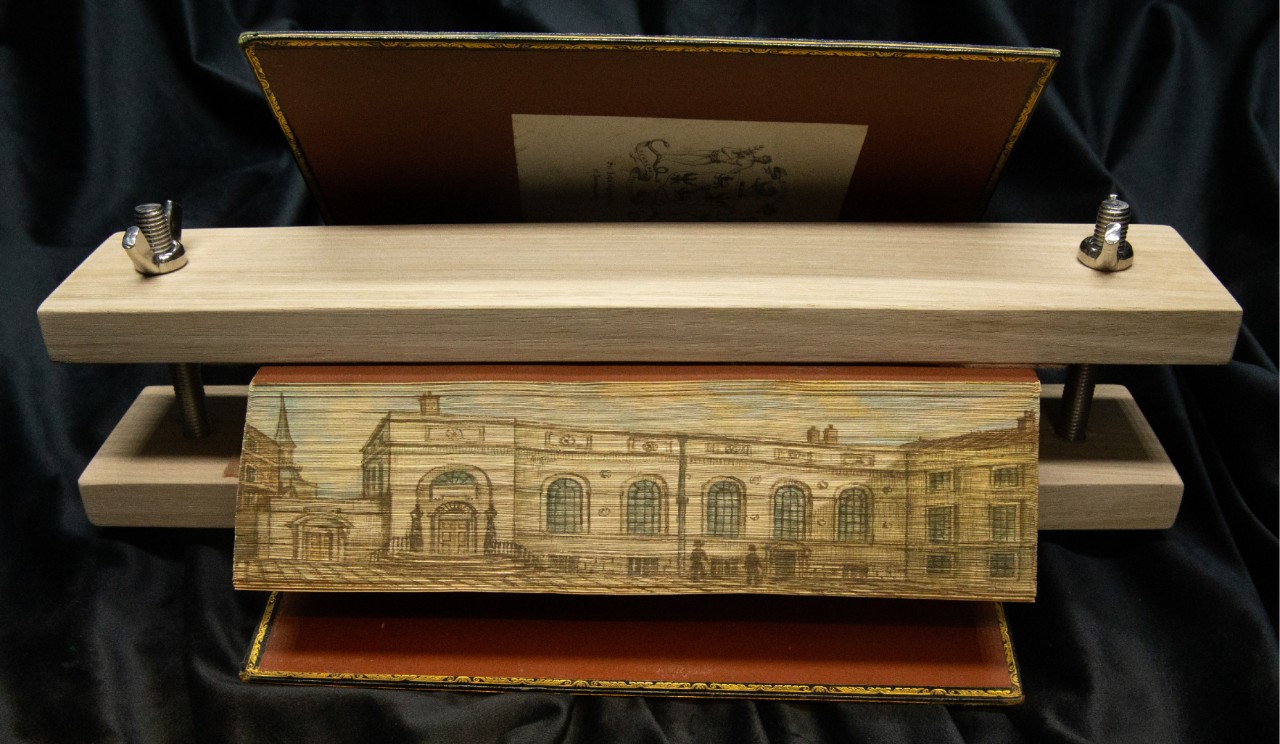

- Fore-edge painting: The poetical works of Henry Kirke White - Deane RB 1285.1 23
- Fore-edge painting: The Student, or, The Midland counties' literary repository. nos. 1-7 - Call number: Deane RB 4738.6
- Fore-edge painting: The complete angler - Call number: RB 513.5 35
- Double fore-edge painting: Proverbial philosophy - Call number: Deane RB 4754.75
- Split double fore-edge painting: The Holy Bible, 1796 - Call number: RB 4696.97
- Fore-edge painting: Hudibras vol. 1 - Call number: RB 4719.69
- Fore-edge painting: The poetical and prose works of Henry Kirke White - Call number: Deane RB 1285.1 14
Access these items
Rare Books and Special Collections (RBSC) can be accessed by staff, students and academics (using existing University credentials), as well as the general public (by registering for a free RBSC community membership).
The items in this collection can be located in the Library catalogue. Make a request to view an item, under "more options" (at least 2 business days in advance). Then visit the Rare Books and Special Collections Reading Room during opening hours to view.
Items in this collection have also been digitised. View and download scans through the Digital Collections website: Fore-edge Paintings
Teach with this item
The Library's extensive Rare Books and Special Collections are available to support research and education, through activities including:
- Academic-led classes
- Library-led classes / Object Based Learning (OBL)
- Using digitised content
Related information
Contact
Please email enquiries to cultural.collections@usyd.libanswers.com